Fed Up With the Feed: Why People Are Ditching Algorithms for Homepages They Actually Control
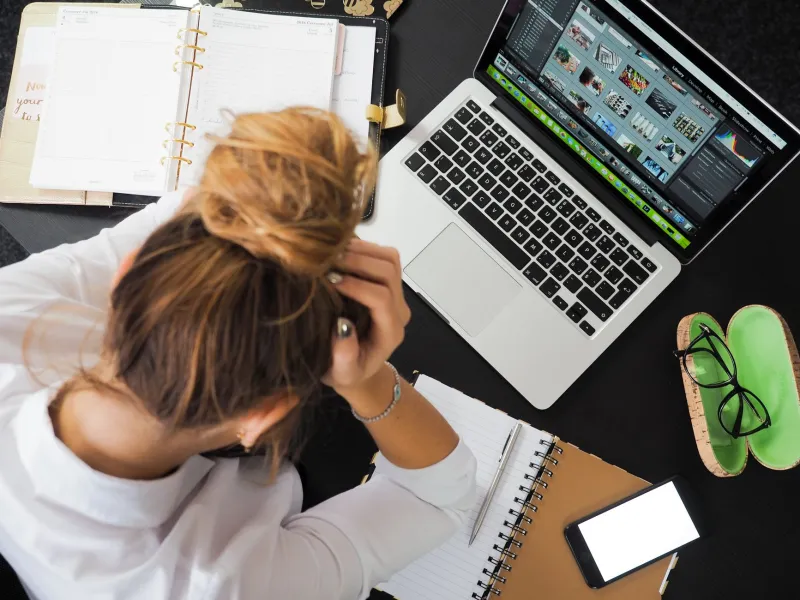
There's a specific kind of exhaustion that doesn't come from working too hard or sleeping too little. It creeps in after about forty-five minutes of scrolling — that low-grade, slightly hollow feeling after you've been shown seventeen things you didn't ask for, four things that made you angry, and one post from a friend you actually wanted to see buried somewhere in the middle. You didn't choose any of it. Something else did.
Welcome to algorithm fatigue. And if you've felt it, you're not imagining things.
The Machine That Decides What You Feel
Social media algorithms weren't designed to make you miserable. They were designed to keep you engaged — which, it turns out, often amounts to the same thing. Platforms like Instagram, TikTok, and X (the site formerly known as Twitter) optimize relentlessly for interaction. Outrage gets clicks. Anxiety keeps eyes on screens. Comparison drives scroll depth. None of that is accidental.
A 2023 Pew Research study found that nearly two-thirds of American social media users reported feeling "worn out" by the amount of political content on their feeds — content they never specifically sought out. Other research has linked heavy algorithmic feed use to increased anxiety, disrupted sleep, and a persistent feeling of not being in control of your own information environment. Psychologists have a term for the specific stress caused by unpredictable reward systems: variable ratio reinforcement. It's the same mechanism that makes slot machines hard to walk away from. Your feed runs on the same engine.
The kicker? You can't turn it off. You can mute, you can unfollow, you can hit "not interested" a hundred times. The algorithm watches that too, recalibrates, and serves you something just slightly different. The house always wins.
What the Old Web Got Right Without Knowing It
Here's something worth sitting with: the original personal homepage era — think GeoCities in its late-nineties, early-aughts prime — was the opposite of this in almost every meaningful way.
When someone built a homepage back then, they decided what went on it. A list of their favorite bands. A page about their cat. An obsessive breakdown of every episode of The X-Files. Visitors who showed up saw exactly what the creator put there, in the order they put it, with no invisible hand rearranging things based on what might generate more clicks. It was static. It was personal. It was, in retrospect, remarkably sane.
Nobody was optimizing for engagement. Nobody was A/B testing their font choices to maximize dwell time. A person made a thing, put it on the internet, and other people either found it interesting or they didn't. That was the whole loop.
You could argue that simplicity was a limitation. But more and more people are starting to see it as a feature.
The Psychological Case for Owning Your Space
There's a concept in psychology called perceived control — the sense that you have meaningful influence over your environment and outcomes. Research consistently shows that higher perceived control correlates with lower stress, better mental health outcomes, and greater overall life satisfaction. The inverse is also true: environments that feel unpredictable and outside your influence tend to generate chronic low-level anxiety.
Now think about your social media feed. When did you last feel like you were genuinely in control of it?
Contrast that with a personal website. You write the content. You choose the layout. You decide whether there's a dark background with neon text or a clean white page with a single centered photo. When you visit your own site — or when someone else does — it looks the same as it did yesterday. It will look the same tomorrow. Nothing has been reshuffled to prioritize a sponsored post. Nobody's engagement score bumped your best friend's update out of view.
That predictability isn't boring. For a lot of people right now, it's a relief.
The Quiet Migration Back
It's happening gradually, without a lot of fanfare, but the signs are everywhere if you know where to look. Platforms like Neocities have seen steady membership growth. Tools that make personal site-building accessible to non-coders are finding new audiences. Newsletters, personal blogs, and portfolio sites are being dusted off or built fresh by people who spent years going all-in on social platforms and came out the other side feeling vaguely depleted.
The people making this shift aren't all tech-savvy developers. A lot of them are regular Americans — teachers, artists, hobbyists, small business owners — who got tired of performing for an audience they couldn't see, curated by a system they couldn't understand, on behalf of a company whose priorities were never really aligned with theirs.
What they're building isn't always polished. Sometimes it's a little rough around the edges. But it's theirs in a way that a profile page never quite manages to be.
Reclaiming the Boring, Beautiful Predictability of Your Own Corner
The word "homepage" used to mean exactly what it sounds like — the home base of your online presence, the place you came back to and the place others could find you reliably. Somewhere along the way, that concept got swallowed by platforms that rebranded your presence as content and your attention as inventory.
Building a personal site in 2025 is, in some ways, a small act of resistance against that trade. It's saying: this is what I want to share, in the format I chose, without a recommendation engine deciding it wasn't engaging enough to show anyone.
It doesn't require a computer science degree. It doesn't require a big audience. It just requires the decision to take up a little space on the internet that operates by your rules instead of someone else's.
For a lot of people who've spent years feeling vaguely jerked around by feeds they couldn't control, that's not a small thing. That's the whole point.
The algorithm will keep optimizing. Your homepage will just keep being exactly what you made it. Increasingly, that sounds like the better deal.