Your Guestbook Is the New Group Chat: Personal Websites Are Bringing Back Real Conversation
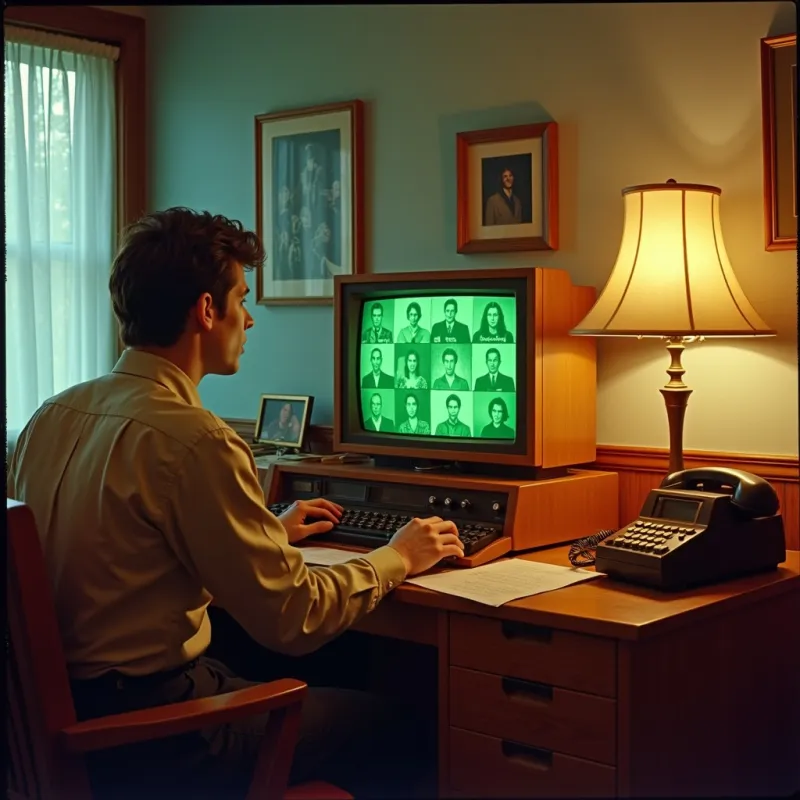
Photo: retro computer guestbook community people connecting vintage internet, via images.stockcake.com
Somewhere in middle America, a woman named Darla runs a personal website about prairie wildflowers. She started it during the pandemic when Instagram's algorithm stopped showing her posts to the followers she'd spent years building. Today, her site gets a few hundred visitors a week. Not millions. Not viral. Just a few hundred people who genuinely want to read about wildflowers, and who leave comments that go beyond a fire emoji.
That's not a failure story. That's exactly the point.
What the Algorithm Took From Us
It's easy to forget, in the age of the For You page and the curated feed, that the internet once felt like a collection of neighborhoods. You wandered. You stumbled onto someone's homepage about their obsession with 1970s muscle cars or their ongoing saga of raising backyard chickens. You left a message in their guestbook. They visited yours. A weird, low-stakes community formed around shared curiosity rather than shared outrage.
Social platforms promised to make this easier. And for a while, they delivered. But somewhere along the way, the platforms optimized for engagement over connection, and engagement — as it turns out — is best driven by anxiety, argument, and the addictive drip of notifications. The town square got replaced by a stadium where someone with a megaphone is always screaming about something.
The guestbook, by contrast, requires a little effort. You have to actually go to someone's site. You have to type something. Nobody is going to algorithmically surface your comment to their followers to maximize interaction. It's just two people, talking, because one of them made something worth talking about.
Owning Your Digital Real Estate
There's a phrase that keeps coming up in indie web circles: "digital real estate." It sounds like something from a marketing deck, but the underlying idea is genuinely radical. When you post on Instagram, you're a tenant. The platform owns the building, sets the rules, and can change the locks at any time. When you have your own domain, your own site, your own space — you own it. Nobody can shadowban your wildflower posts. Nobody can tweak an algorithm and cut your reach by 80% overnight.
This isn't a fringe concern anymore. Over the past few years, platform after platform has demonstrated exactly how quickly the terms of the deal can change. Twitter became X and rewired itself around chaos. Facebook's organic reach has been dying a slow death for a decade. TikTok's future in the US remains genuinely uncertain. Every time one of these platforms shifts the ground beneath creators' feet, a few more of them start looking for somewhere they actually own the land.
The personal website isn't just a creative outlet. For a growing number of people, it's infrastructure. It's the place that stays stable when everything else is moving.
The Guestbook Renaissance
Here's something delightful: guestbooks are back. Not ironically. Not as a retro aesthetic gag. Actually back, as a functional tool for building community on personal sites.
Services designed for indie web use have started offering simple, embeddable comment and guestbook tools that don't require users to log into a third-party platform to participate. You just type your name, leave a message, and it's there. No account creation. No data harvesting. No recommended posts from brands you've never heard of appearing in the sidebar.
The experience is disarmingly warm. Readers who leave guestbook entries tend to write more. They introduce themselves. They share why the site resonated with them. It's the difference between someone double-tapping a photo and someone actually stopping to say something real.
Site owners report that their guestbook interactions — even from a much smaller audience than their old social media followings — feel more meaningful. One blogger who documents roadside Americana across the US described it this way: "I had 12,000 Instagram followers and felt completely alone. Now I have maybe 400 people who visit my site regularly and I feel like I know them."
Indie Blogs and the Return of the Blogroll
Remember blogrolls? Those lists of links in the sidebar of a blog, pointing to other blogs the author liked? They were one of the original community-building tools of the web — a way of saying "these are my people, go check them out." They died when social media made sharing a one-click action and everyone migrated their attention to platforms that handled discovery automatically.
They're coming back too.
A growing network of personal sites and indie blogs have started explicitly linking to each other in the old-fashioned way, building webs of connection that don't rely on any platform's recommendation engine. Some communities have organized around shared directories, essentially digital neighborhoods where you can browse by interest and find actual humans with actual websites.
This is, almost exactly, how GeoCities worked. The platform organized sites into neighborhoods — Area 51 for sci-fi fans, Heartland for folks writing about American life, SunsetStrip for music heads. You could wander between them and find your people. The indie web is reinventing this from the ground up, just without the flaming gif dividers. (Though honestly, bring those back too.)
The Resistance That Doesn't Feel Like Resistance
Nobody who's building a personal website today is necessarily thinking of themselves as a political actor. Darla is just writing about wildflowers. The roadside Americana blogger is just taking pictures of old signs. But collectively, the choice to build and maintain your own space online — to own your audience, your content, and your community — is a meaningful pushback against the consolidation of the internet into a handful of corporate platforms.
Every personal homepage is a small argument that the web can be more than a few giant companies deciding what everyone sees. Every guestbook entry is a reminder that connection doesn't require an algorithm to broker it.
Your corner of the web is waiting. Build it, put a guestbook on it, and see who shows up. You might be surprised how many people are looking for somewhere real to land.