Smaller Is the New Bigger: Why Niche Online Communities Are Ditching the Mega-Platforms
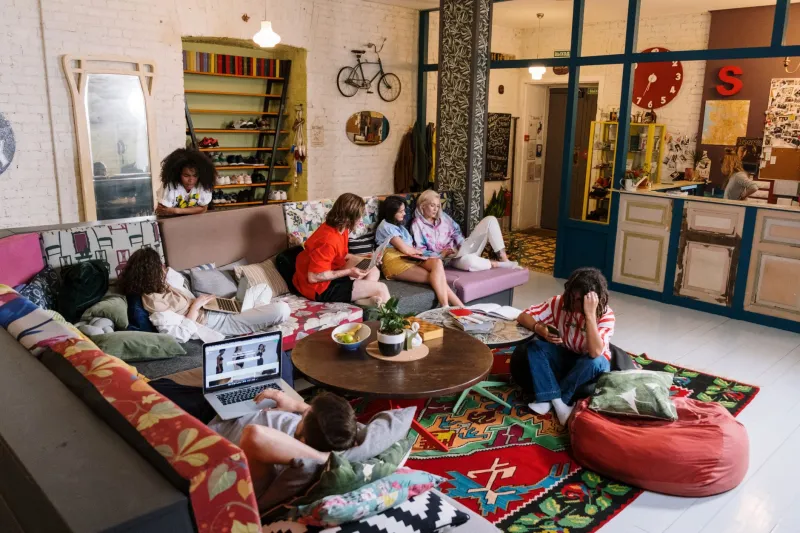
There's a quiet exodus happening online right now, and it doesn't look like much from the outside. No dramatic announcements. No viral threads about quitting Twitter or deleting Instagram. Just a steady stream of people — hobbyists, superfans, niche interest groups, longtime internet regulars — slipping away from the giant platforms and rebuilding somewhere smaller, somewhere they actually control.
Call it the Great Migration. Or maybe just call it common sense.
When Everywhere Means Nowhere
Here's the thing about massive social platforms: they were built to hold everyone. And when you try to hold everyone, you end up serving no one particularly well. The knitting community shares a feed with the cryptocurrency guys, the true crime podcasters, the political commentators, and whatever random thing went viral at 11 p.m. last Tuesday. It's loud. It's exhausting. And it's almost impossible to feel like you actually belong to anything.
For years, people put up with it because the audience was there. You went where the eyeballs were. But somewhere along the way, a lot of communities started asking a different question: what if we'd rather have fifty people who genuinely care than five thousand people who might glance at something while scrolling?
That shift in thinking is driving a real behavioral change across the American internet landscape.
Discord Servers and the Return of the Private Room
Discord didn't invent the idea of a private community space — that honor probably goes to IRC, or maybe your high school's AOL chatroom — but it did make the concept mainstream again. Suddenly, groups that had been scattered across Reddit threads and Facebook Groups had a place to gather that felt more like a clubhouse than a public square.
The appeal is pretty easy to understand. You have to be invited, or at least find the door. There's a structure — channels, roles, moderators. The conversation doesn't disappear into an algorithmic void; it stays in the room where it happened. People who are there chose to be there.
For niche communities especially, that friction is actually a feature. A server dedicated to vintage synthesizer repair or competitive disc golf or 1990s Saturday morning cartoons doesn't want casual lurkers who wandered in from a trending hashtag. It wants the people who searched for this specific thing because they genuinely needed to find their people.
The Forum Is Having a Quiet Renaissance
While Discord gets most of the attention, something even older is making a comeback: the self-hosted forum. Platforms like Discourse have made it dramatically easier to spin up a real, functional community space without needing a computer science degree. And a surprising number of independent creators, small publications, and niche interest groups are doing exactly that.
The reasons are practical as much as philosophical. When you host your own forum, you own the data. You set the rules. You don't wake up one morning to find that the platform changed its algorithm, sunset a feature you depended on, or sold your community's engagement patterns to an advertiser. What you build is yours.
That sense of ownership — which will feel very familiar to anyone who ever had a GeoCities page back in the day — is genuinely meaningful to people who've been burned by platform dependency before.
Personal Website Networks: The Neighborhood Model, Rebuilt
Here's where things get really interesting. Beyond Discord and self-hosted forums, a growing number of communities are organizing around networks of personal websites. Individual members build their own pages — a blog, a portfolio, a little digital home — and then link them together through web rings, shared directories, or collaborative blogrolls.
If that sounds familiar, it should. It's almost exactly how the early internet worked, back when GeoCities neighborhoods like Heartland, Area51, and SoHo were actual communities of people who linked to each other, commented on each other's pages, and formed real relationships around shared interests.
The difference today is that the tools are better, the hosting is cheaper, and people have the benefit of hindsight. They've seen what happens when you build your community on someone else's land. They know the platforms can disappear, change the rules, or just stop caring about the weird little corner you used to call home.
Building a network of personal sites means every member has their own foundation. Nobody can take the whole thing down at once.
The Psychology of the Smaller Space
Ask people why they prefer these smaller, more controlled digital environments and you'll hear the same few things over and over. It feels safer. It feels more real. The conversations are actually good. People remember your name.
There's real psychology behind this. Humans aren't wired for communities of millions. We're wired for something closer to the size of a neighborhood — researchers have been arguing for decades that our social cognition tops out somewhere around 150 meaningful relationships. When a community grows past a certain point, it stops feeling like a community and starts feeling like a crowd.
The platforms optimized for growth at all costs, and in doing so, they accidentally destroyed the thing that made online communities worth joining in the first place.
Smaller spaces fix that. When there are two hundred people in a Discord server, you start recognizing usernames. You remember who gave you good advice last month. You feel accountable in a way you never do on a platform where you're essentially anonymous in a sea of millions.
You Don't Need to Know Code to Build This
One of the biggest mental blocks people hit when they think about building their own corner of the internet is the assumption that it requires technical knowledge they don't have. And honestly, that hasn't been true for a while now.
Hosting platforms have gotten remarkably accessible. Website builders that don't require a single line of code are genuinely good now. Forum software installs in minutes. Even setting up a custom domain — which used to feel like a mysterious technical ritual — is something most people can do in an afternoon with a little patience and a decent tutorial.
The barrier isn't technical anymore. It's psychological. It's convincing yourself that your community is worth the effort of building something real, rather than just defaulting to wherever everyone else already is.
The Neighborhood Is Worth Building
There's a reason the GeoCities model resonates with people who remember it, and there's a reason younger internet users who never experienced it are independently reinventing it. The idea of a neighborhood — a place with neighbors you recognize, streets you know, a front door that's yours — is a deeply human thing to want.
The mega-platforms promised connection and delivered noise. The migration happening right now is people choosing to trade scale for meaning, trading follower counts for actual relationships, trading the algorithm's attention for a smaller room full of people who actually showed up.
Your corner of the web is still out there waiting to be built. The tools are better than they've ever been. The only thing left to figure out is who you want as your neighbors.