You Had a MIDI File of 'Wonderwall.' Congratulations, You're Internet Leadership Material.
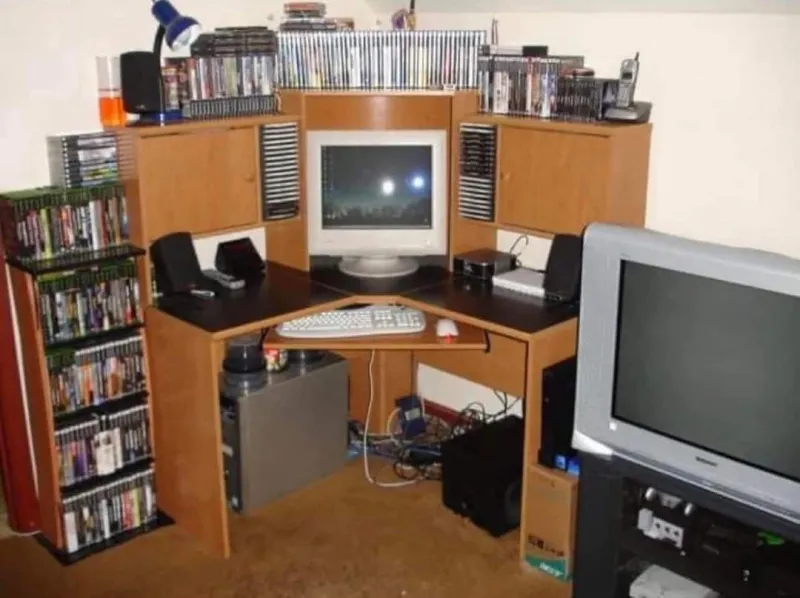
Photo: 1990s teenager bedroom desktop computer dial up internet CRT monitor nostalgic, via i.pinimg.com
Millennials, gather round. We need to talk about your childhood, specifically the hours you spent in a beige room waiting for a single JPEG to load, line by line, like a Polaroid developing. Everyone said you were wasting your time. Everyone was wrong. You were completing an unpaid apprenticeship in digital self-sufficiency, and it's about to pay off.
Here's the diagnostic. Count how many of these apply to you.
1. You Learned HTML From Right-Clicking 'View Source'
Nobody taught you. There were no bootcamps. You just... looked under the hood of someone's Sailor Moon shrine and started stealing <marquee> tags like a raccoon in a dumpster. That's called reverse engineering, and it's now a skill companies pay six figures for. You learned it at age thirteen, for free, from a stranger's dragon page.
2. You Had Strong Opinions About Guestbook Etiquette
Signing a guestbook with just your name? Barbaric. You left a proper message, maybe a smiley in ASCII, because you understood something that took the rest of the internet two decades to relearn: conversation is the product. Today we call this 'community management.' You called it 'checking if anyone signed my guestbook.'
3. You Moderated Something Before You Could Drive
Maybe it was a Yahoo! Club, a forum, a chat room for your middle school's Lord of the Rings fandom. You learned to de-escalate flame wars, spot trolls, and write the phrase 'please keep it civil' with the weary authority of a UN peacekeeper. Every community manager on LinkedIn wishes they had your reps.
4. You Know What a Broken Link Feels Like From the Inside
You've clicked a link to a dead GeoCities page and felt genuine grief. This makes you fluent in link rot — the quiet tragedy of the web — and it's why you'll actually care about archiving, preserving, and owning your own stuff. The generation after you grew up assuming everything lives on a server somewhere forever. You know better. You were there when it didn't.
5. You Understand That 'Free' Has a Landlord
Your Angelfire page was free, and when platforms died, your page died with them. Lesson learned early, scar tissue intact: if you don't own the ground, you don't own the garden. You're exactly the person who's going to buy a domain, host your own thing, and laugh at the next platform implosion from a lawn chair.
6. You Can Make Something Ugly on Purpose
Tiled starfield background. Neon green text on black. A MIDI of 'Wonderwall.' You did all of it, and you did it with confidence, because the goal was never minimalism — it was self-expression at maximum volume. That's called a point of view, and it's the one thing no AI can generate for you.
7. You Remember When the Internet Was Small Enough to Know
Your webring had, like, twelve sites, and you visited all of them. You weren't consuming content; you were pen-palling with strangers who liked what you liked. That instinct — small, human, discoverable — is exactly what the small-web renaissance is built on. And you've been trained for it since the Clinton administration.
So What Now?
If you checked five or more boxes: congratulations, you're not nostalgic, you're experienced. The internet is quietly rebuilding itself into something smaller, weirder, and more human — hand-coded pages, webrings, personal domains, guestbooks. That's not a retro fad. That's your childhood, back from the dead and asking for a job.
Dust off the <blink> tag. The internet needs adults who remember how to build.